




Whitepaper
Senior living energy usage breakdown: a portfolio guide for Canadian care facility operators
Learn how senior living operators can analyze energy usage across their building portfolio to uncover inefficiencies and manage energy costs.
Energy costs are hard to manage in senior living because your buildings run all day, care teams need reliable systems, and residents feel changes quickly. The goal is to reduce utility bills and improve efficiency while maintaining good lighting, air quality, safety, and accessibility intact.
Senior care buildings are energy-intensive: benchmarked senior care facilities show median energy use around 1.2 GJ per square metre, which is higher than offices at 1.1 GJ/m² and about one-third higher than retail and schools at 0.9 GJ/m².
If you manage several retirement homes, nursing homes, or assisted living facilities, you need to know which sites are actually driving high energy costs. A high bill can come from usage, weather, care intensity, delivery charges, demand charges, contract timing, or a billing issue.
Start by building a comparable energy baseline across your portfolio. For senior care facilities, that means 12 to 24 months of data across every facility, account, and fuel type.
Your baseline should include:
This is the first step in energy management in senior living facilities. Without a clean baseline, you won’t be able to compare facilities fairly.
Energy efficiency in senior living is about prioritization. Instead of trying to optimize every building at once, identify which facilities deserve attention first.
Avoid ranking every property solely by total annual spend. A large mixed-use campus will usually use more total energy than a smaller long-term care home, but that does not mean it is performing worse.
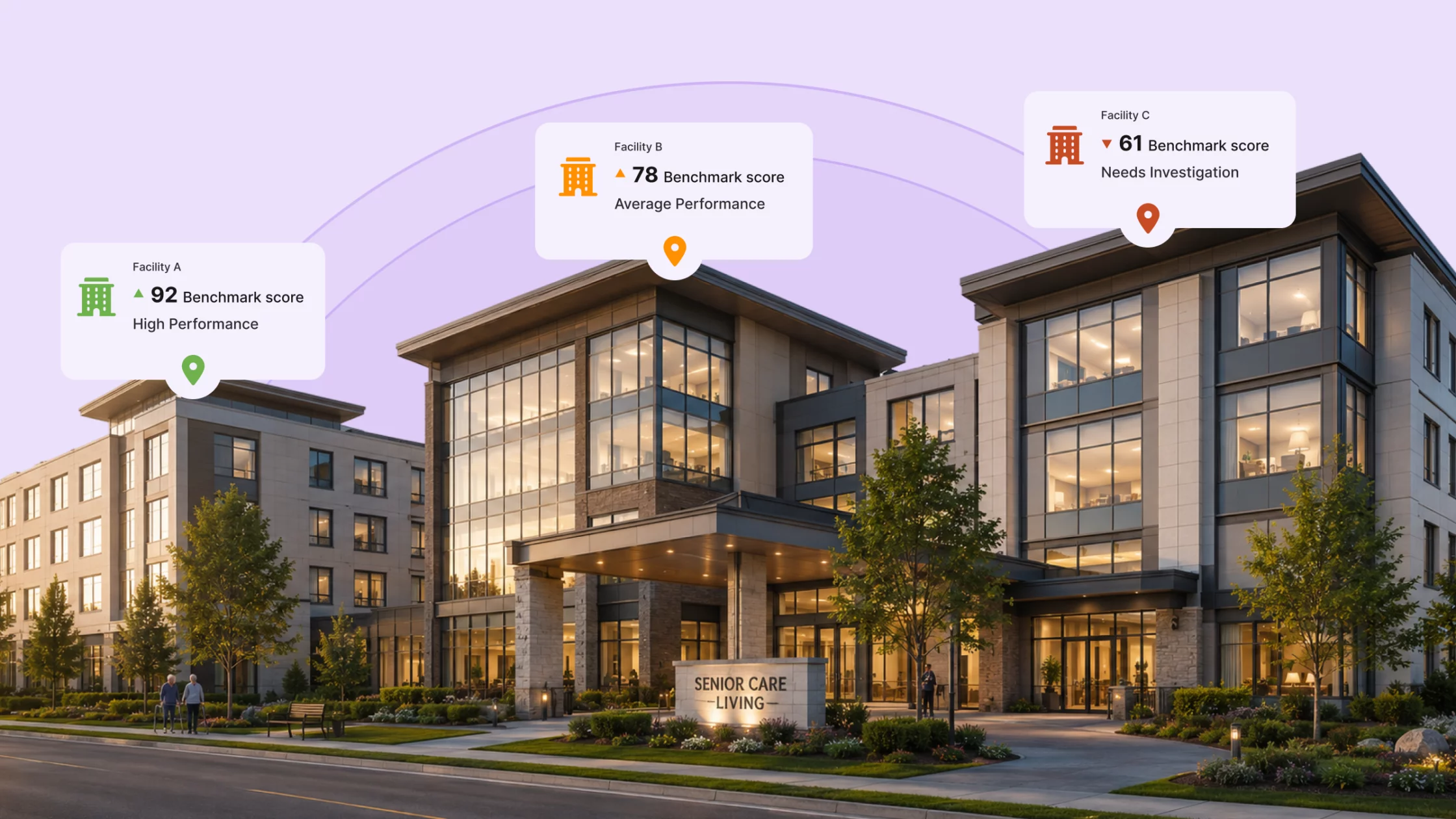
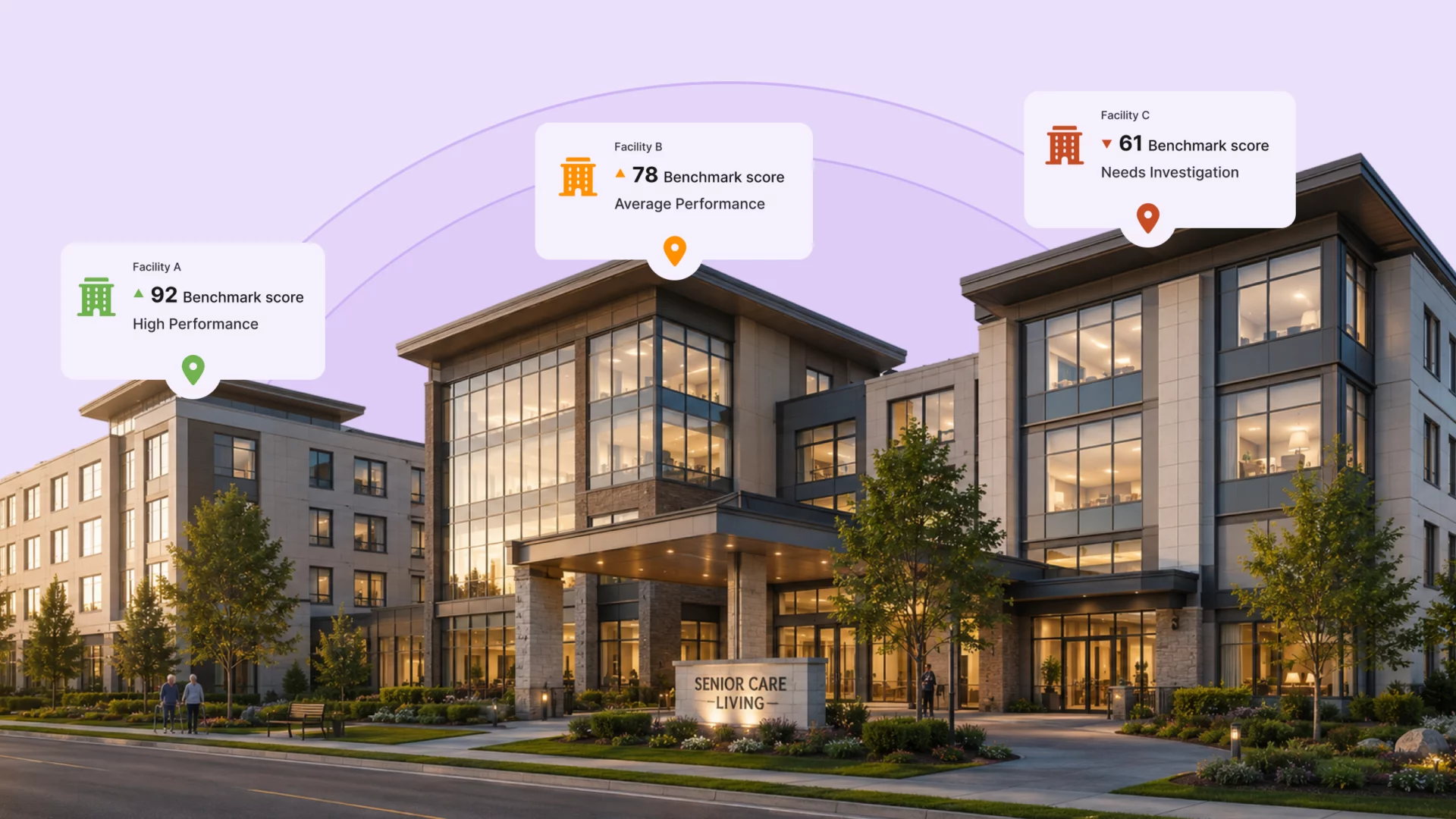
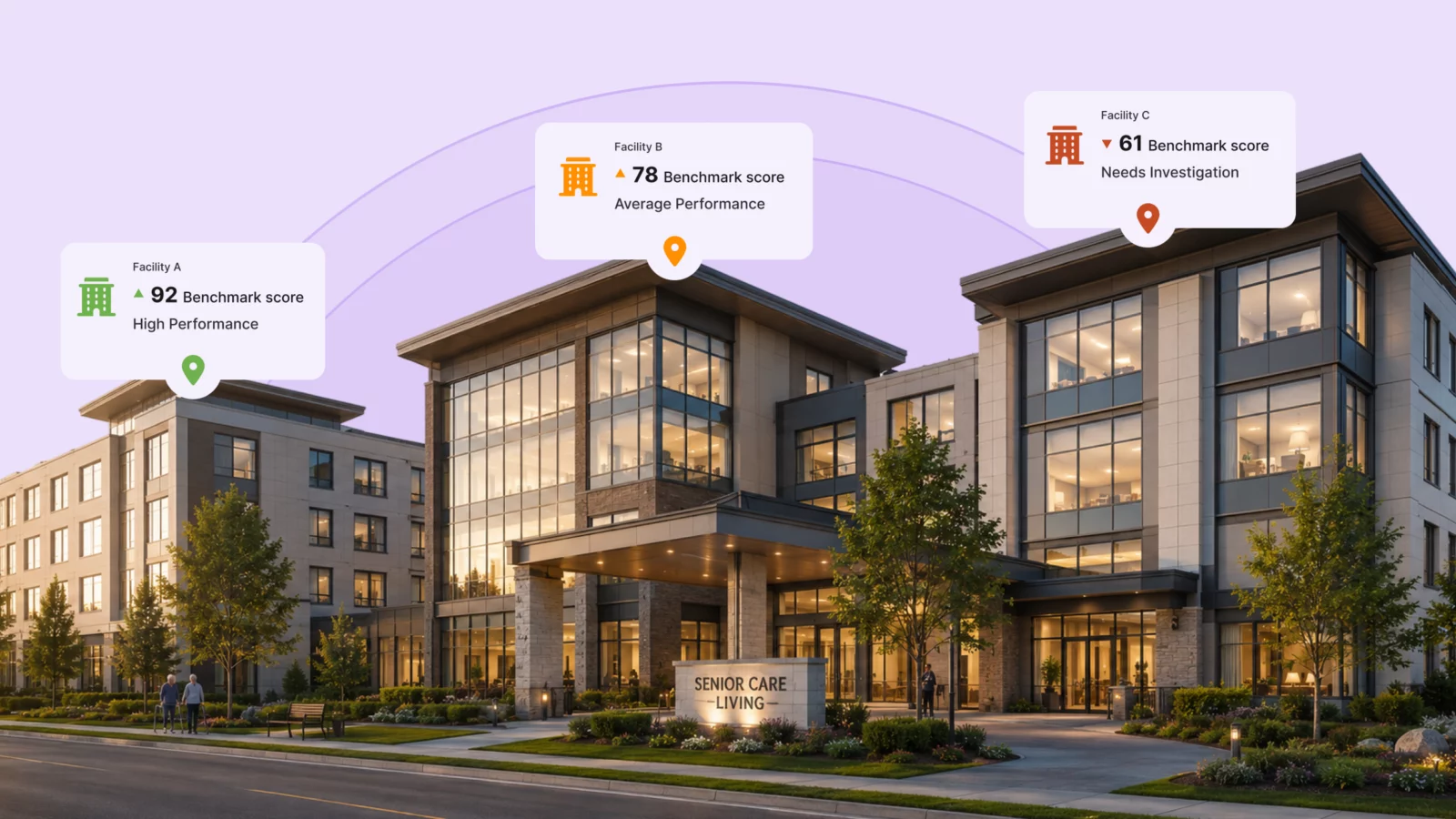
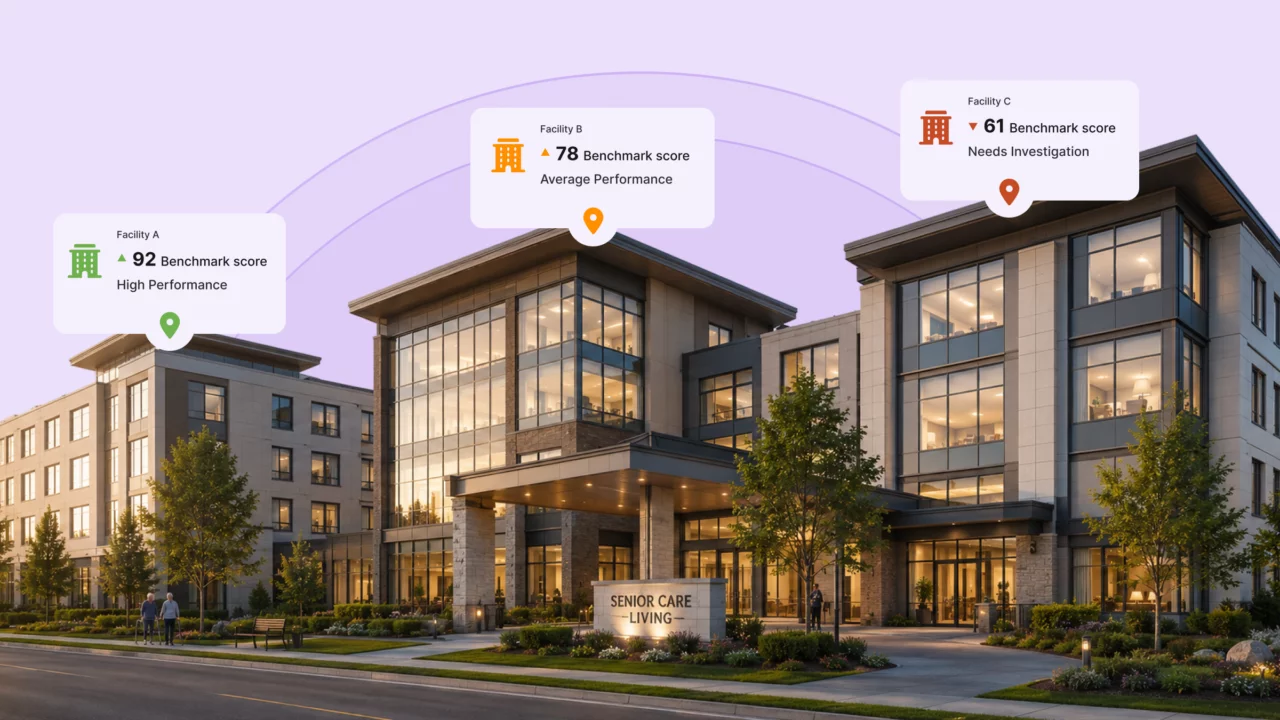
Once your baseline is in place, compare similar facilities and flag the worst-performing 10% to 25% based on normalized cost, usage, or emissions intensity. For a deeper breakdown of senior living energy usage, you can use a portfolio-level framework to separate cost, consumption, emissions, and facility context before deciding what to fix.
That shortlist becomes your first group of sites to investigate. From there, you can move into the next step: identifying energy waste, separating low-risk actions from higher-risk ones, and fixing the issues that are driving cost.
The fastest savings often come from operating the systems you already have more effectively. This is where reducing energy consumption in care homes can be lower risk than a major equipment project.
Energy consumption in senior facilities usually concentrates in heating, hot water, HVAC, ventilation, lighting, and controls. Benchmarking data shows natural gas supplies roughly 55 percent of total energy use in Canadian senior living buildings, while electricity supplies about 41 percent.
Start with the systems that use the most energy:
Monthly bills are lagging indicators. By the time a bill reveals a problem, your facility may have already paid for weeks of avoidable waste.
A clearer energy view can help you catch unusual usage patterns, cost spikes, or site-level changes earlier, and then decide whether the issue needs a bill review, schedule check, contract review, or deeper facilities investigation.
Energy cost reduction in senior housing has to protect resident comfort. The goal is to balance both: reduce waste while maintaining thermal comfort, indoor air quality, lighting quality, and safe movement.
Care facilities have long operating hours, safety requirements, and higher comfort expectations than many commercial buildings. Some energy actions are low risk. Others need careful review before implementation.
Energy actions and resident comfort considerations
| Energy action | Savings opportunity | Resident comfort or care risk | Resident comfort guardrail |
| Adjust HVAC schedules in offices, admin areas, and lightly used common spaces | High | Low | Limit schedule changes to non-resident spaces unless comfort needs are reviewed. |
| Correct simultaneous heating and cooling | High | Low | Review controls first so fixes do not create hot or cold zones. |
| Review ventilation settings | Medium | Medium | Maintain indoor air quality and infection-control requirements. |
| Optimize domestic hot water recirculation | Medium | Medium | Protect bathing, laundry, cleaning, and temperature requirements. |
| Add or tune lighting controls | Medium | Low | Keep care areas, corridors, bathrooms, and entrances safely lit. |
| Reduce temperature setpoints broadly | Medium | High | Avoid blanket changes across resident areas. |
| Shut equipment off aggressively | Medium | High | Confirm the equipment is not needed for comfort, care, safety, or backup. |
Energy optimization for senior living facilities should become a routine operating process, not a one-time project. A useful model is Plan-Do-Check-Act, the continual improvement framework used in ISO 50001 energy management systems.
For a senior care portfolio, that can be simple:
This keeps energy management practical. It also helps your team avoid one-off fixes that never become part of normal operations.
The safest path is to begin with data, fix operational issues first, and use capital projects where the case is clear. That gives you cost optimization without guessing.
For most portfolios, the starting point is simple: build a clean baseline, compare similar facilities, flag the first group of normalized outliers, and investigate the cause before taking action.
That is how to reduce energy usage in senior living while protecting comfort, sustainability, and resident care. For multi-site operators who need a clearer view of utility data, costs, emissions, and savings opportunities across facilities, Jotson’s energy management platform can help bring that work into one portfolio view.

Dark Apps