


News
Calgary Home Heat Loss Analysis Now Available Through Jotson
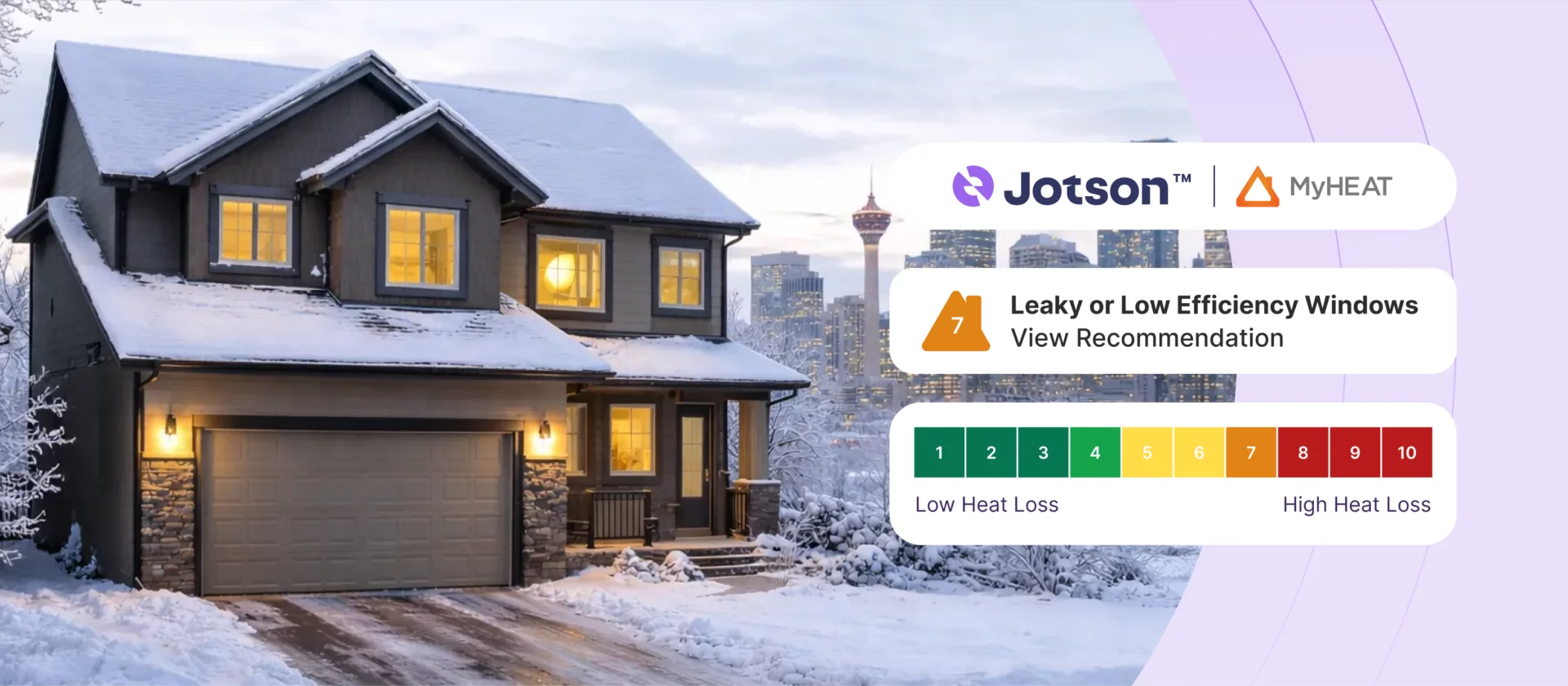
Jotson has partnered with MyHEAT to bring aerial heat loss analysis to Calgary homeowners. If you’ve wondered why your energy bills…
The shift from summer to winter often nudges Alberta solar households from being net exporters (you generate more electricity than you use) to net importers (you use more than you generate).
That change is natural — that’s because winter brings shorter days, a lower sun angle, and more snow on panels — all of which cut your solar generation. At the same time, your home’s electricity use usually rises with heating loads, longer evenings with lights on, more people staying home, humidifiers, and EV charging.
That flip matters for your bill:
Several Alberta retailers now offer seasonal or adjustable rate options that help you make the most of these shifts — rewarding solar exports in sunny months and keeping winter bills lower when generation drops.
The key is knowing when to make that change. That’s where Jotson’s Solar Analysis Toolkit comes in. It helps you pinpoint your personal Switch Zone — the period each year when your home transitions from exporting to importing — so you can switch at the right time and keep your savings on track.
Your meter tracks two things — imports and exports. Understanding how each is billed, and how your provider links them under one rate, is key to maximizing your savings.
When your home needs more power than your solar panels are producing, you import electricity.
When your solar panels produce more than you use, you export electricity.
Some Alberta retailers offer rate plans that adjust with the seasons — one rate for high-generation periods (spring and summer) and another for high-consumption periods (fall and winter).
Here’s how that typically works:
Switching between these seasonal rates helps solar homeowners stay ahead of Alberta’s changing daylight and usage patterns. The trick is timing your switch around when your home’s imports start to exceed exports — your personal “Switch Zone.”
That timing isn’t the same for everyone. It depends on your roof orientation, solar panel size, and household habits. That’s why Jotson’s Solar Analysis Toolkit uses 20 years of weather data and your own import/export history to model the best time for your switch — so you’re never left guessing.
Assume solar rates of High = $0.30/kWh and Low = $0.09/kWh.
Note: Delivery, distribution, riders, and fixed fees are added separately and don’t change when you switch energy rates.
On seasonal rates, you choose one rate per billing period that applies to both imports and exports: High (higher export credit, higher import price) or Low (lower export credit, lower import price).
Switching from High to Low as you become import-heavy (winter) helps you save on your energy bill when you’re getting less sun and using more power. Switching from Low to High as you become export-heavy (spring) helps you capture more value from your solar exports. That timing is where most of the savings happen.
Chasing the perfect date for when to switch from High to Low or vice versa can be difficult. Aim for a window in the fall (for High to Low) and in the spring (for Low to High). A “switch zone” recognizes there’s no single magic day, just a reliable period when the savings tilt in your favour.
| Type | What it is | You pay / earn | Best time to use | Notes |
| Imports | Power you buy from the grid. | Pay a fixed or variable rate (market/RoLR). | Year-round. | Delivery fees stay the same. |
| Exports | Power you sell back to the grid. | Earn export credits (¢/kWh). | Sunny months. | Credits roll over or may be paid out. |
| Seasonal rate – High | Higher import cost, higher export credit. | Same rate for both imports & exports. | Export-heavy months. | Switch to Low in fall. |
| Seasonal rate – Low | Lower import cost, lower export credit. | Same rate for both imports & exports. | Import-heavy months. | Switch to High in spring. |
Timing your rate change can make a noticeable difference — but it’s hard to know exactly when your solar system crosses that line between exporting and importing more power.
Jotson’s Solar Analysis Toolkit takes the guesswork out of it. It models your expected solar generation and household consumption using:
The result is your personalized Switch Zone — a window each year when it’s financially smart to move from a high export rate to a lower import rate (or the reverse).
Prefer to squeeze every last cent from your exports? Watch your inverter of billing data during your Switch Zone — once you notice a consistent drop in daily exports over several days, it’s likely time to switch. Want more predictability and peace of mind? Switch earlier and lock in savings sooner.
To get your personalized solar analysis, we’ll ask you a few questions about your panel, inverter, and installation details.
After you fill out the questions, you’ll get your solar analysis:
Winter flips most Alberta solar homes from exporting to importing — so getting the right rate will make a difference. Open Jotson, run your Solar Analysis, and see the personal Switch Zone for your home and know the best time to review or adjust your rate.
No spreadsheets. No guesswork. Just clear, insight to help you keep more of your savings this season.
Most homes switch from a high rate to a low rate in the fall as solar production drops and from Low to High in the spring when exports rise again. The exact timing depends on your system and usage — Jotson’s Solar Analysis Toolkit helps you pinpoint your personal switch window.
Both apply to what you buy and sell. The High rate pays more for exported power but also costs more for imports, making it ideal for sunny, export-heavy months. The Low rate pays less for exports but charges less for imports — better for winter when you use more power.
Switching too early may reduce your export credits while you’re still generating more than you use. Switching too late means you’ll overpay for imports once production drops. That’s why Jotson recommends switching within your “Switch Zone” — the period when the math reliably tilts in your favour.
Most retailers let you request a switch online or by email. The change usually takes effect on your next meter read. Some providers require notice or a minimum number of days between rate changes. Some allow you to retroactively apply your rate as far back as your last billing cycle.
If your export credits outweigh your import charges, the balance appears as a credit (–$) on your bill. Most retailers carry that credit forward to reduce your next bill; some pay it out annually or if you close your account. Check your retailer’s policy for specifics.
Most homes switch from a high rate to a low rate in the fall as solar production drops and from Low to High in the spring when exports rise again. The exact timing depends on your system and usage — Jotson’s Solar Analysis Toolkit helps you pinpoint your personal switch window.
Both apply to what you buy and sell. The High rate pays more for exported power but also costs more for imports, making it ideal for sunny, export-heavy months. The Low rate pays less for exports but charges less for imports — better for winter when you use more power.
Switching too early may reduce your export credits while you’re still generating more than you use. Switching too late means you’ll overpay for imports once production drops. That’s why Jotson recommends switching within your “Switch Zone” — the period when the math reliably tilts in your favour.
Most retailers let you request a switch online or by email. The change usually takes effect on your next meter read. Some providers require notice or a minimum number of days between rate changes. Some allow you to retroactively apply your rate as far back as your last billing cycle.
If your export credits outweigh your import charges, the balance appears as a credit (–$) on your bill. Most retailers carry that credit forward to reduce your next bill; some pay it out annually or if you close your account. Check your retailer’s policy for specifics.

Dark Apps